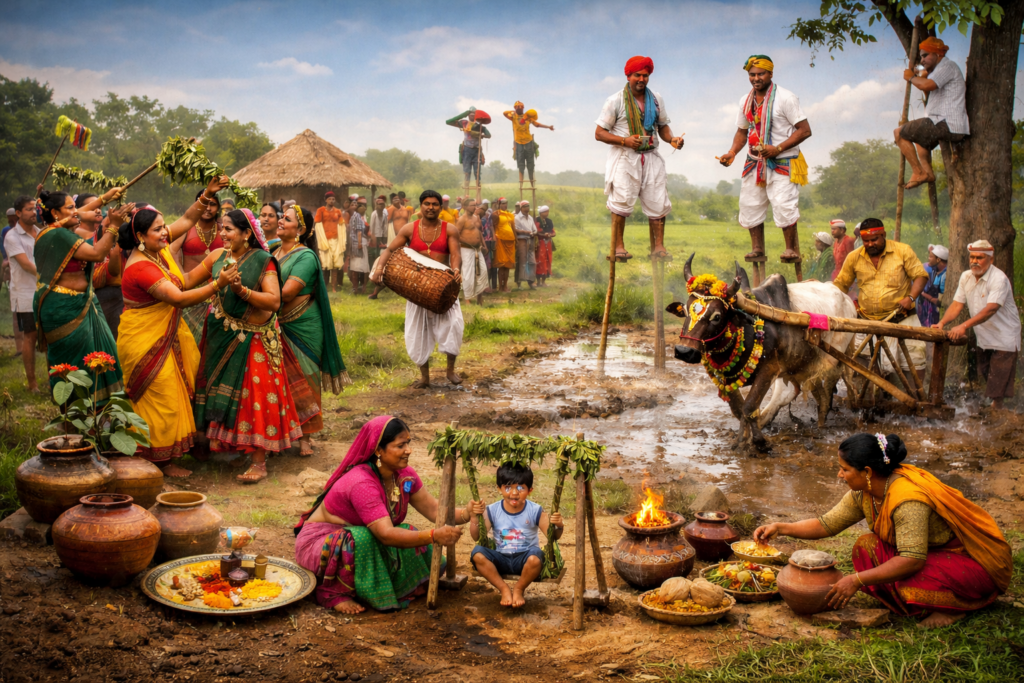
Hareli is one of the most important and ancient traditional festivals of Chhattisgarh, deeply connected with agriculture, cattle worship, and rural life. The festival marks the beginning of the monsoon season and the start of farming activities.
🌱 Cultural & Agricultural Significance
- Farmers worship agricultural tools such as ploughs, sickles, and hoes.
- Cattle (especially cows and bullocks) are bathed, decorated, and worshipped, as they are considered vital to farming.
- Neem leaves are tied to homes, cattle sheds, and fields as a symbol of protection, health, and prosperity.
🎶 Folk Traditions & Celebrations
- Villages come alive with Chhattisgarhi folk songs and dances.
- Traditional games, swings, and community gatherings are common.
- Elders pass on cultural values and farming traditions to the younger generation.
🛕 Rituals & Beliefs
- Special rituals are performed to pray for good rainfall, fertile land, and a prosperous harvest.
- Homes are cleaned and decorated, and traditional food is prepared.
- Children enjoy rural games and festivities, strengthening community bonds.
🌾 Importance in Rural Life
Hareli reflects the deep bond between nature, farmers, and livestock. It celebrates sustainable living, respect for the environment, and unity within villages. The festival plays a key role in preserving Chhattisgarh’s rich cultural identity.
📅 When It Is Celebrated
- Celebrated during the Shravan month (July–August), on the new moon day (Amavasya).